Gadgets by Small: Difference between revisions
>Wongck (Created page with " ===Megatalk Board for Atari ST Computers=== Gadgets by Small had designed and was marketing a Macintosh emulator for the Atari ST line of computers which allowed the use of ma...") |
>Catmando |
||
| (17 intermediate revisions by 3 users not shown) | |||
| Line 1: | Line 1: | ||
[[Image:dave15.jpg|thumb|David Small]] | |||
Gadgets by Small, Inc. is a hardware addon company started by Sandy Small and Dave Small. Gadgets by Small is well know for making an Atari behaving like an Apple Macintosh, i.e. it makes emulators. In additional to Mac emulators, it also produced some software and had in it's pipeline a Super ST (SST) accelerator for the Atari ST. | |||
In 1986, David Small teamed up with Joel Rosenblum, an old friend who was also a computer programmer, to start Data Pacific, the company that would handle marketing and sales of the Magic Sac. | |||
Gadgets by Small lost a law suite to INTEGRATED ELECTRONICS CORPORATION, a Colorado corporation, which forces it to declare bankruptcy in 1994. | |||
== | ==Magic Sac== | ||
Emulates a Mac Classic on an Atari ST or TT computer. Released through Data Pacific in September, 1986. | |||
===Others | |||
* [http://www.trademarkia.com/gadgets-by-small-inc-74178941.html Trademark status] | ==Spectre== | ||
Gadgets by Small designed the Spectre Mac emulator and allowed the Atari ST to use many Mac programs which were not hardware dependent. It may be also called Spectre 128. Merlin Group designed an interface card (Megatalk Board for Atari ST Computers) for the Atari which supplied it with much of that hardware, allowing it to use Mac MIDI, networks, printers, hard drives, scanners and more. | |||
==Spectre GCR== | |||
<gallery> | |||
Image:spectre_gcr.jpg|Spectre GCR | |||
Image:spectre_GCR.jpg|Box contents | |||
Image:Spectre_GCR_GBS_(1).jpg|Cased | |||
Image:Spectre_GCR_GBS_(2).jpg|Internal | |||
Image:Spectre_GCR_GBS_(3).jpg|Internal | |||
</gallery> | |||
The Spectre GCR required the owner to purchase a set of official Apple Macintosh 128K ROMs and the Macintosh Operating System 6.0.8 disks. This avoided any legal issues of copying/pirating Apple's software. The emulated Mac had a screen of 640x480, instead of the 512x384 that the Mac Plus sported. The device is 20% faster, and has a 30% bigger screen than a Mac! The Spectre GCR plugged into the cartridge slot, and modified the frequency of the data to/from the single-speed floppy drive of the Atari ST, thus allowing it to read Macintosh GCR format discs which required a multi-speed floppy drive. The emulator runs best with a high-resolution monochrome monitor, such as Atari's own SM124, but will run on colour displays by either displaying a user-selectable half of the Macintosh screen, or missing out alternate lines to fit the lower resolution colour display. | |||
Although Spectre GCR would run in 1MB of memory, 2MB or more was recommended. | |||
[[Image:ST-Mac.jpg|thumb|left|Compare screen of Mac & ST]] | |||
====Spectre GRC Documentation==== | |||
*The [http://www.scribd.com/doc/21013692/Spectre-GCR-Manual Spectre GCR Manual] | |||
*The [http://www.oocities.org/clu-da-bard/ unofficial support page] | |||
*The [http://en.wikipedia.org/wiki/Spectre_GCR Wiki entry] | |||
<br> | |||
<br> | |||
<br> | |||
<br> | |||
==SST 68030 Accelerator for Atari ST Computers== | |||
Gadgets by Small designed an accelerator card for the Atari ST line of computers. The design was a system that far exceeded anything available for the Atari at that time. The unit replaced the original 16 bit, 8 megahertz microprocessor with a 32 bit unit at up to 40 megahertz. The board also supplied up to 8 megabytes of 32 bit wide memory, and a math coprocessor | |||
==Others== | |||
* Gadgets by Small[http://www.trademarkia.com/gadgets-by-small-inc-74178941.html Trademark status] | |||
* An [http://www.atariage.com/forums/topic/9183-spectre-gcr/page__view__findpost__p__87382 update] from Dave Small on AtariAge. | |||
* Video of [http://www.youtube.com/watch?v=V2g0Fo4PdeE Macintosh on Atari ST] | |||
==Magazine References== | |||
*STart, volume 3, issue 6, p51-52 (Review) | |||
*STart, volume 3, issue 7, p17-18 (Review) | |||
*STart, volume 4, issue 2, p47-49 (Review) | |||
==External Links== | |||
* [https://www.youtube.com/watch?v=cqEVyeZSZmc Video Demo] - Spectre GCR running on Atari Mega ST | |||
* [https://www.youtube.com/watch?v=PD8OqFCLoi8 Video Demo] - Spectre GCR running on Atart ST | |||
<BR> | |||
<BR> | |||
<br /> | |||
<br /> | |||
Back to [[Company]] | |||
<BR> | |||
<BR> | |||
[[Category:Hardware Components]] | |||
[[Category:Peripherals]] | |||
[[Category:Accelerators]] | |||
Latest revision as of 03:02, 28 July 2019

Gadgets by Small, Inc. is a hardware addon company started by Sandy Small and Dave Small. Gadgets by Small is well know for making an Atari behaving like an Apple Macintosh, i.e. it makes emulators. In additional to Mac emulators, it also produced some software and had in it's pipeline a Super ST (SST) accelerator for the Atari ST.
In 1986, David Small teamed up with Joel Rosenblum, an old friend who was also a computer programmer, to start Data Pacific, the company that would handle marketing and sales of the Magic Sac.
Gadgets by Small lost a law suite to INTEGRATED ELECTRONICS CORPORATION, a Colorado corporation, which forces it to declare bankruptcy in 1994.
Magic Sac
Emulates a Mac Classic on an Atari ST or TT computer. Released through Data Pacific in September, 1986.
Spectre
Gadgets by Small designed the Spectre Mac emulator and allowed the Atari ST to use many Mac programs which were not hardware dependent. It may be also called Spectre 128. Merlin Group designed an interface card (Megatalk Board for Atari ST Computers) for the Atari which supplied it with much of that hardware, allowing it to use Mac MIDI, networks, printers, hard drives, scanners and more.
Spectre GCR

Spectre GCR
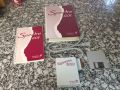
Box contents
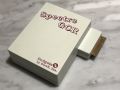
Cased
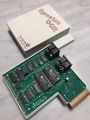
Internal

Internal


.jpg)
.jpg)
.jpg)
The Spectre GCR required the owner to purchase a set of official Apple Macintosh 128K ROMs and the Macintosh Operating System 6.0.8 disks. This avoided any legal issues of copying/pirating Apple's software. The emulated Mac had a screen of 640x480, instead of the 512x384 that the Mac Plus sported. The device is 20% faster, and has a 30% bigger screen than a Mac! The Spectre GCR plugged into the cartridge slot, and modified the frequency of the data to/from the single-speed floppy drive of the Atari ST, thus allowing it to read Macintosh GCR format discs which required a multi-speed floppy drive. The emulator runs best with a high-resolution monochrome monitor, such as Atari's own SM124, but will run on colour displays by either displaying a user-selectable half of the Macintosh screen, or missing out alternate lines to fit the lower resolution colour display.
Although Spectre GCR would run in 1MB of memory, 2MB or more was recommended.

Spectre GRC Documentation
- The Spectre GCR Manual
- The unofficial support page
- The Wiki entry
SST 68030 Accelerator for Atari ST Computers
Gadgets by Small designed an accelerator card for the Atari ST line of computers. The design was a system that far exceeded anything available for the Atari at that time. The unit replaced the original 16 bit, 8 megahertz microprocessor with a 32 bit unit at up to 40 megahertz. The board also supplied up to 8 megabytes of 32 bit wide memory, and a math coprocessor
Others
- Gadgets by SmallTrademark status
- An update from Dave Small on AtariAge.
- Video of Macintosh on Atari ST
Magazine References
- STart, volume 3, issue 6, p51-52 (Review)
- STart, volume 3, issue 7, p17-18 (Review)
- STart, volume 4, issue 2, p47-49 (Review)
External Links
- Video Demo - Spectre GCR running on Atari Mega ST
- Video Demo - Spectre GCR running on Atart ST
Back to Company